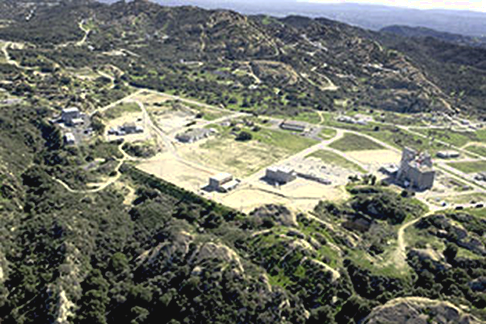
Welcome to the U.S. Department of Energy (DOE) website for the Energy Technology Engineering Center (ETEC). The DOE hosts this website to inform Santa Susana Field Laboratory (SSFL) neighbors and other stakeholders about our past, present, and what we plan for the future.
If you are looking for information about early commercial nuclear energy research at SSFL, the Sodium Reactor Experiment (SRE) accident of 1959, or DOE’s current environmental studies and what we plan for the future cleanup of SSFL, you have come to the right place. On this website you will find a multitude of information on topics such as the SRE, the System for Nuclear Auxiliary Power (SNAP), current environmental studies, and cleanup plans.
ETEC is closed, and the site is being characterized in preparation for cleanup. The DOE is committed to cleaning up Area IV of SSFL consistent with the 2007 Consent Order and the 2010 Administrative Order on Consent signed with the state of California. During this process, we will communicate with our regulators, neighbors, and others about what we are doing, and solicit their advice and input on plans and proposed decisions. We will continue to add more information to this website about the history, past operations, previous cleanup efforts, and future cleanup efforts at ETEC. If you have any questions or comments, please see our contact page.
Other useful web sites devoted to SSFL are hosted by the California Department of Toxic Substances Control (DTSC),NASA, the USEPA, and The Boeing Company.
Tuesday, May 15, 2012 6pm-9pm Community Built Alternative Series: Overview of Applicable Environmental Laws Register Here
Wednesday, May 16, 2012 10:30am-12noon General Public Visitation for Area IV at Santa Susana Field Laboratory
Thursday, May 17, 2012 6:30pm-8:30pm SSFL Open House hosted by DTSC at Grand Vista Hotel Simi Valley, CA
Thursday, June 7, 2012 5pm-9pm Community Built Alternative Series: Identification of Preliminary Options for Alternative Development Register Here
Saturday, June 9, 2012 9am-5pm Community Built Alternative Series: Alternative Development Working Session Register Here
RSS Feed: Stay notified of updates to the ETEC website. Add the URL of our RSS feed to your favorite RSS reader.
April 2012
DTSC Approves Phase 3 Work Plan for Chemical Data Gap Investigation
The Phase 3 Soil Chemical Sampling at Area IV of the Santa Susana Field Laboratory (SSFL) addresses the methodologies being implemented to complete the Phase 3 Chemical Data Gap Investigation for Area IV and the NBZ of the SSFL. The Phase 3 Work Plan and associated appendices can be found below:
Work Plan for Chemical Data Gap Investigation
Appendix A Master Field Sampling Plan
Appendix B Quality Assurance Project Plan (QAPP)
Appendix C Worker Safety and Health Program
Appendix D Standard Operating Procedures (SOPs)
March 2012
DOE is pleased to provide you with an electronic version of the March 2012 CleanUpdate. We invite you to:
• Find out the latest status of the chemical sampling program in SSFL Area IV
• Hear from the DOE Managers on upcoming priorities for work in Area IV leading to cleanup
• Check out the redesigned DOE ETEC website
• Peruse the DOE 2011 Annual Community Involvement Report to learn the various ways DOE is partnering with the SSFL Community
• Learn about the recently initiated Soil Treatability Study
• Read our new “Conversation with the Director” to hear from John Jones on the technical and budgetary outlook for 2012
The CleanUpdate Newsletters are located under Community--Newsletters.
March 2012
Addendum No. 8 to the Master Work Plan/Field Sampling and Analysis Plan
documents the rationale for the location of chemical soil samples to be collected during Phase 1 (Co-located) and Phase 2 (Random) of soil sampling within the Northern Buffer Zone. This addendum has been approved by DTSC.
February 2012
Clearly Contaminated Areas Updated for Subarea 6
Using previous RFI and recent Phase 1 co-located sampling results, two areas previously identified were expanded and three new areas were identified that are clearly contaminated with chemicals and will likely require cleanup. These locations are shown in: Figure 1 and Figure 2. DTSC has concurred with the chemical contamination areas identified for Subarea 6.
Quick Links